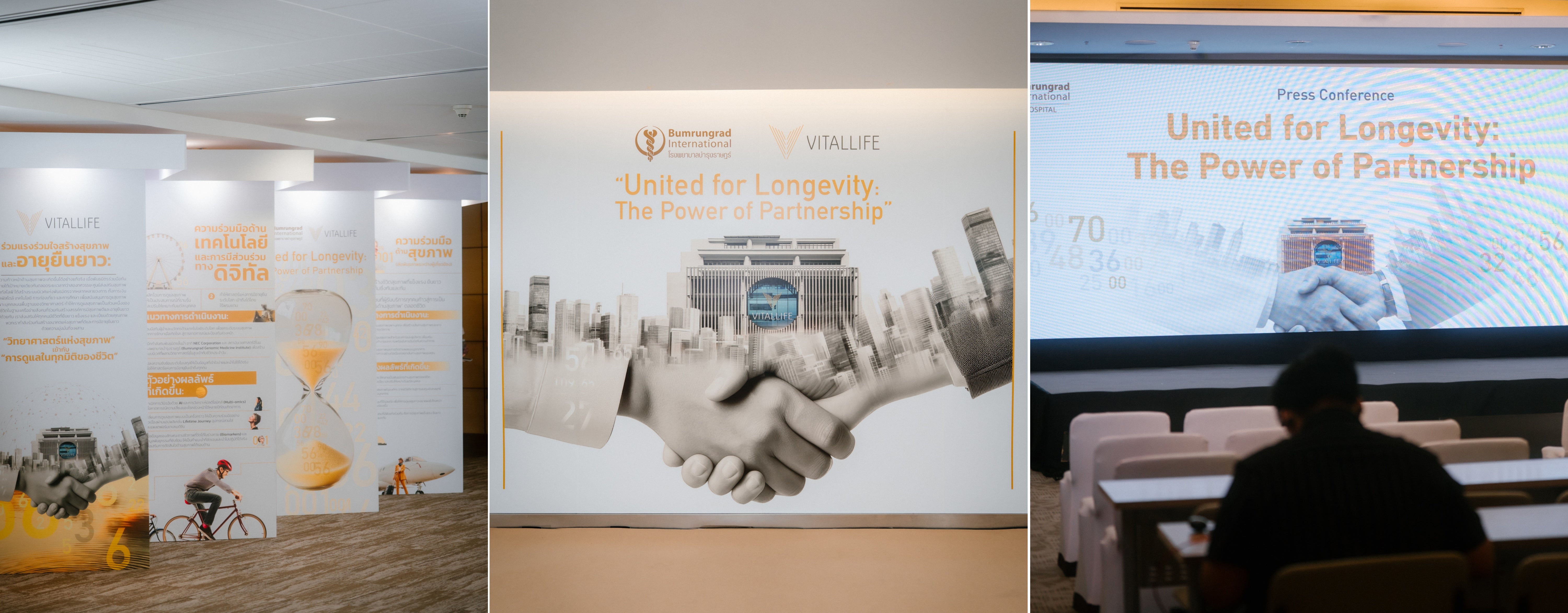
VitalLife Scientific Wellness Center, the wellness arm of Bumrungrad International Hospital, has announced the launch of the Longevity Ecosystem—a strategic collaboration with leading organizations across the tourism, finance, lifestyle, education, and technology sectors. The initiative aims to deliver seamless, holistic healthcare that extends from the hospital into everyday life, empowering people to live longer, healthier lives. The Center also highlighted Asia-Pacific as a key opportunity, citing the region as the world’s fastest-growing market for longevity science.
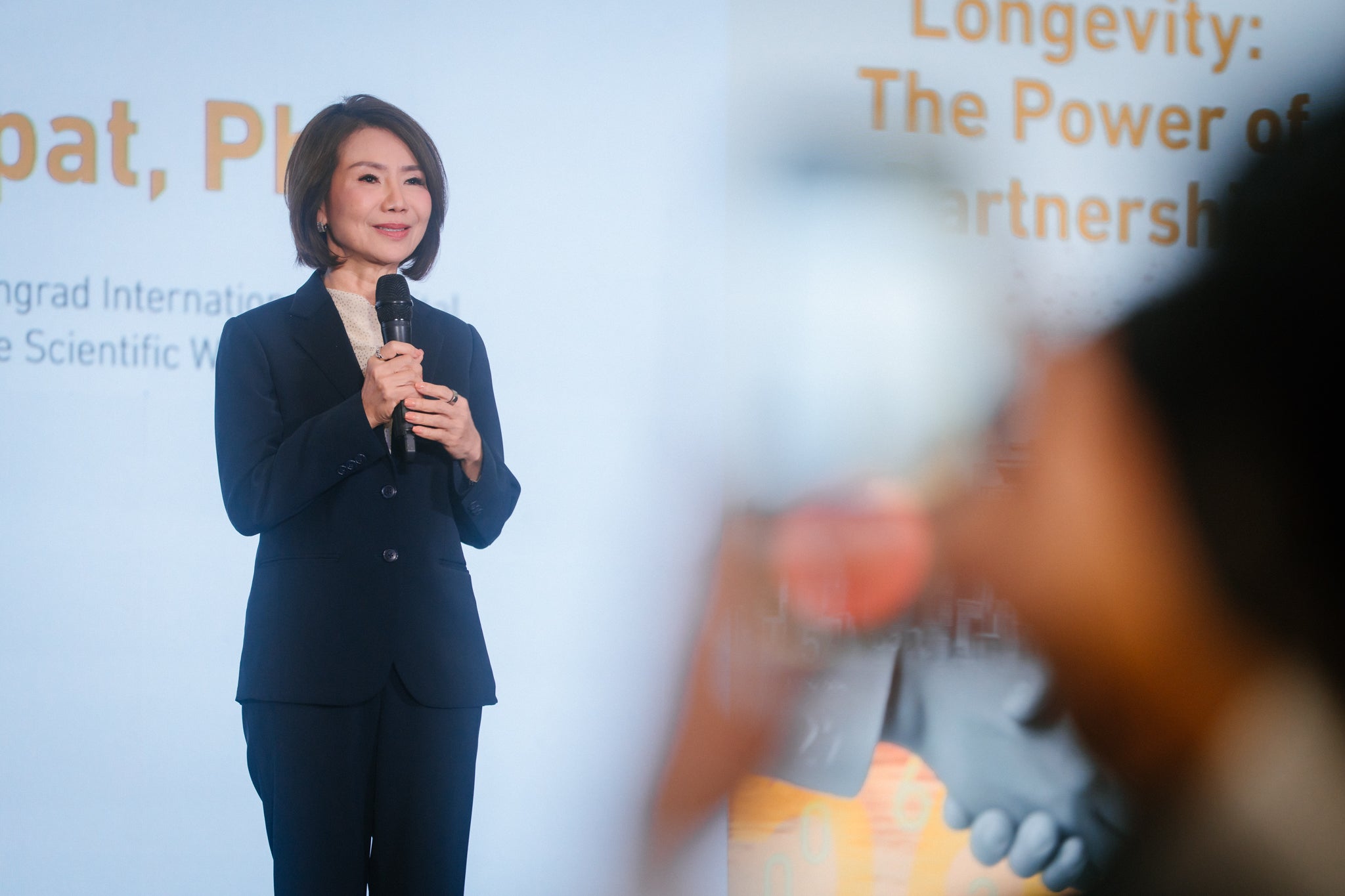
Artirat Charukitpipat, PhD, Chief Executive Officer of Bumrungrad International Hospital and Executive Advisor to VitalLife Scientific Wellness Center, stated that VitalLife, part of Bumrungrad International Hospital, has officially launched the “Integrated Longevity Ecosystem.” This strategic collaboration framework brings together partners across multiple industries—including tourism, financial services, lifestyle, education, and technology—to extend longevity-focused care beyond the hospital into everyday life, with the goal of enabling people to live longer, healthier lives.
For more than four decades, Bumrungrad International Hospital has remained committed to its mission of delivering world-class healthcare, providing care to patients from over 190 countries worldwide and pioneering medical tourism in Asia. While the hospital has earned global recognition for its excellence in treating illness and serving as a trusted destination in times of need, this is no longer sufficient. Today, people no longer seek a healthcare system that waits for illness to occur before offering treatment; instead, they expect one that helps them stay healthy at all times. This marks a fundamental shift in how health is perceived—one that medical institutions must evolve to meet.
“Twenty-five years ago, Bumrungrad established VitalLife as Asia’s first medically based wellness center, driven by the belief that prevention, not just treatment, would define the future of healthcare. Today, VitalLife is recognized as a leader in longevity medicine, supported by a world-class scientific advisory board and hospital-grade clinical standards,” said Artirat.
According to the Global Wellness Economy, the global wellness economy was valued at USD 6.8 trillion in 2024 and is projected to grow to USD 10 trillion by 2029. The Asia-Pacific region is the world’s fastest-growing market for longevity medicine, expanding at an annual rate of over 11%. Across many markets, more than 60% of consumers report that maintaining good health as they age is their top priority.
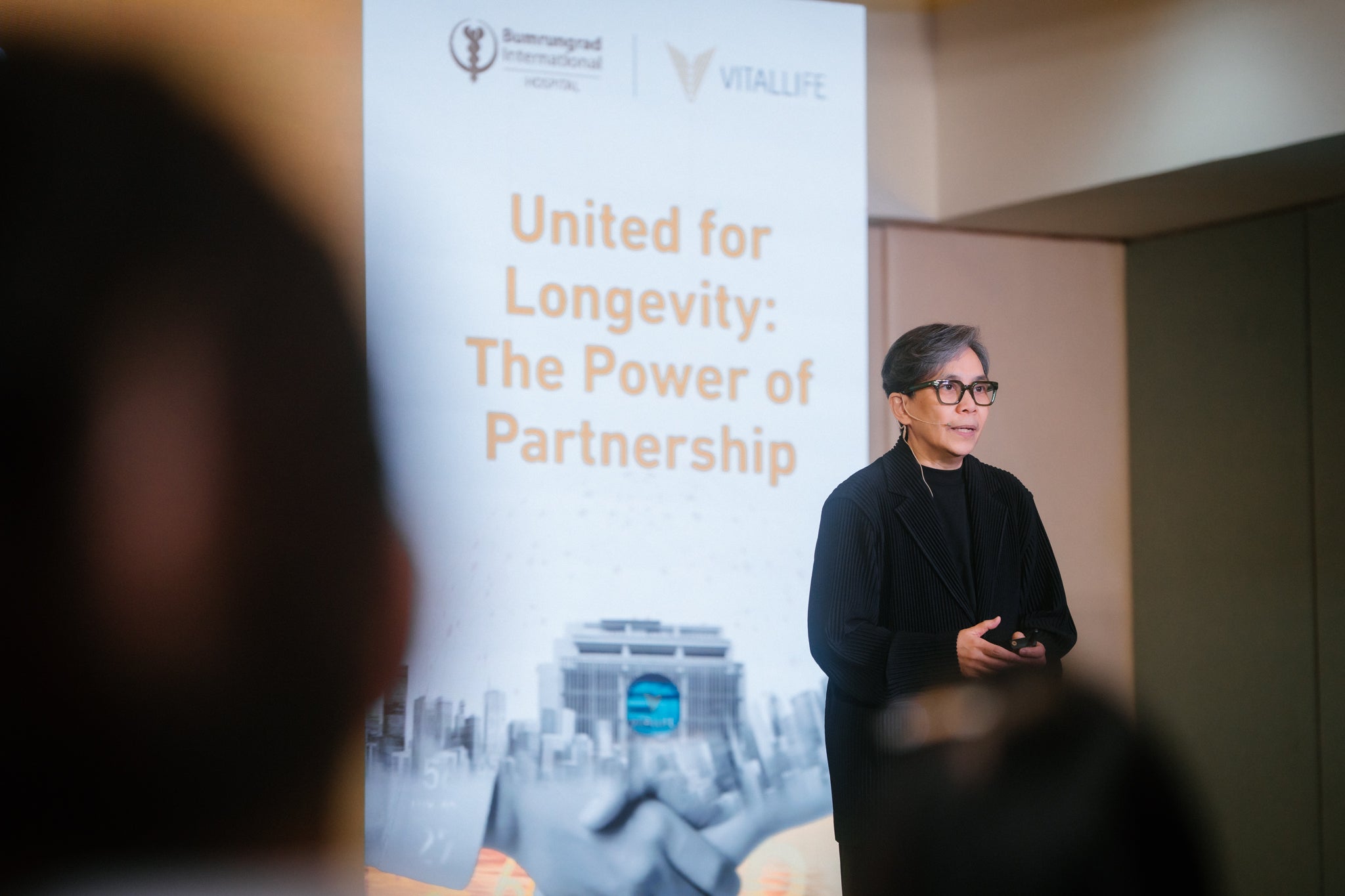
Napas Paorohitya, Chief Marketing Officer of Bumrungrad International Hospital, said that the Integrated Longevity Ecosystem has been designed around strategic partnerships across five core sectors, each playing a distinct role:
Tourism partnerships – enabling clients to follow their personalized health plans seamlessly, from pre-travel preparation through the journey itself and post-travel recovery.
Financial services partnerships – integrating long-term health planning with comprehensive financial planning.
Lifestyle partnerships – expanding access to customer segments that value excellence, precision, and performance-driven living.
Academic and research partnerships – involving leading research institutes and universities in longevity science to ensure that programs are grounded in the latest scientific evidence and continue to evolve alongside advances in knowledge.
Technology and digital partnerships – delivering personalized insights, continuous and real-time health monitoring, and a seamless care experience that keeps individuals connected to their health journey anytime, anywhere.
“Through collaboration with these partners, VitalLife will be able to engage with our clients at the moments that matter most—everyday life decisions that have a lasting impact on long-term health and wellbeing,” she said.
Napas added that this strategic partnership model is significant not only for the healthcare sector, but for the broader business landscape. Data from the Collaboration Economy indicates that nearly one-third of global sales today are generated through business ecosystems and partnerships, with 73% of leading organizations aligning their partnership strategies with core business objectives. The data further shows that many organizations derive 30–60% of their revenues from partnerships and collaborations, making partner-driven opportunities the most successful channel for closing sales compared with other marketing and sales approaches.
Napas further noted that partnerships create powerful synergies and shared value for both businesses and clients in several ways: 1.Expanded reach – Partnerships enable organizations to extend their capabilities into new markets and reach customers at different touchpoints without having to build everything independently. Each partner contributes complementary strengths that others may lack. 2.Enhanced customer experience – Collaboration among mutually reinforcing organizations delivers integrated experiences that no single entity could achieve alone, creating greater value for customers while benefiting all parties involved. 3.Shared trust – When trusted organizations collaborate, credibility is transferred. Customers who already trust one partner are more likely to embrace another. 4.Accelerated innovation – Working with academic institutions and technology partners brings fresh perspectives, cutting-edge research, and new capabilities that drive continuous advancement. 5.Mutual growth – Strong partnerships generate value for all stakeholders, enabling access to new audiences, new capabilities, and new opportunities for innovation.
“The outcomes we are seeing go beyond marketing support. This is a true strategic partnership in which all parties actively contribute to delivering the best possible outcomes for both the organization and our clients,” Napas concluded.
In addition, the longevity lifestyle market is projected to grow from USD 58.2 billion in 2025 to USD 183.8 billion by 2033. The Asia-Pacific region represents a key opportunity for this model, as it is the fastest-growing market for longevity science globally, while Thailand continues to be internationally recognized as a leading destination for medical tourism.
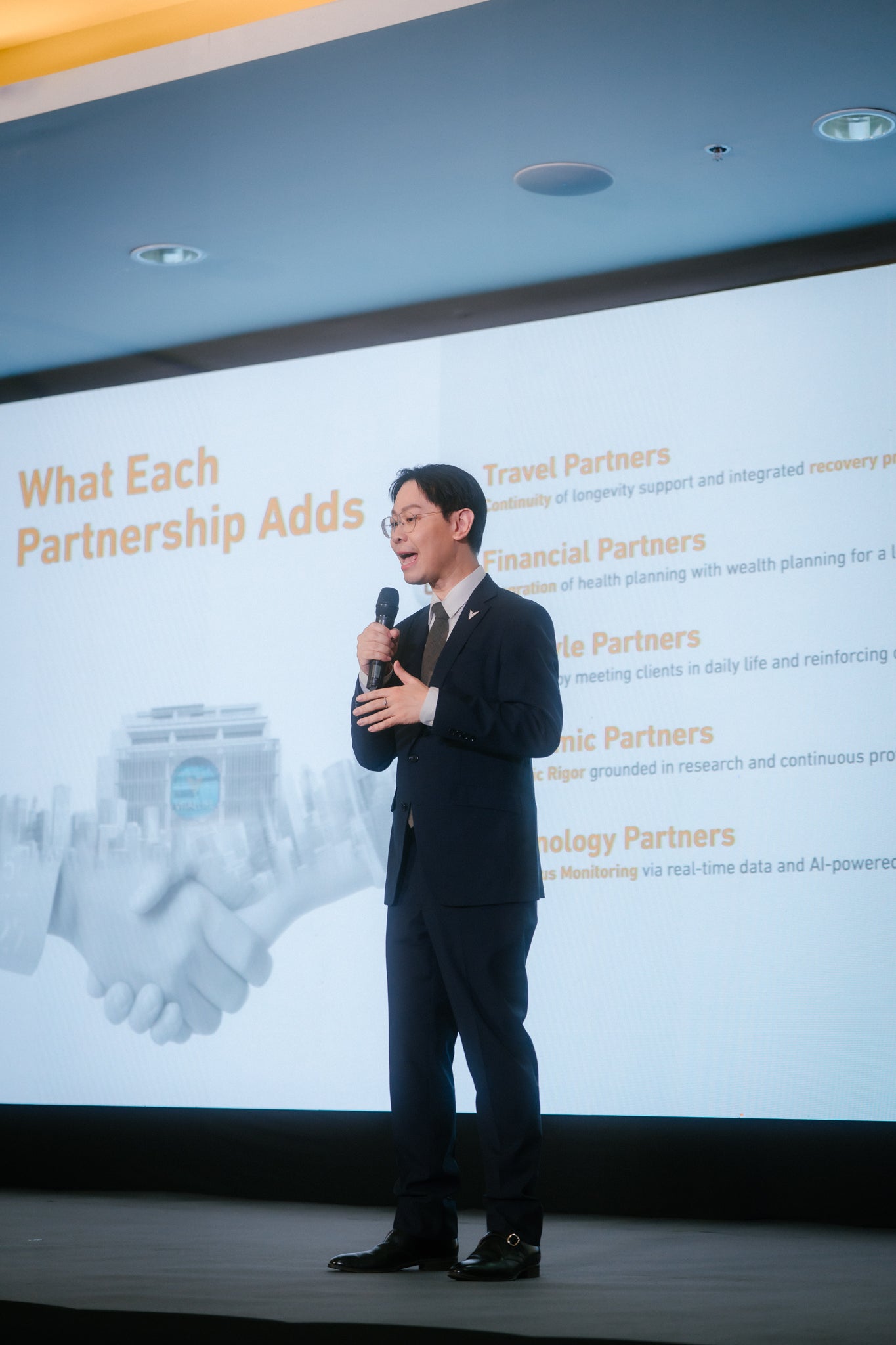
Meanwhile, Asst. Prof. Polakit Teekakirikul, MD, Chief Executive Officer of VitalLife Scientific Wellness Center and Esperance and Chief Science Officer of VitalLife Scientific Wellness Center and Bumrungrad International Hospital, said that VitalLife is a leader in longevity medicine, offering holistic health assessments, personalized programs, and evidence-based care grounded in scientific principles. However, he noted that a key challenge faced by all organizations in this field is that:
“Many people struggle to translate medical advice into daily habits. Knowing is not the same as doing. This is where longevity science often falls short—not in scientific rigor, but in real-world implementation. No matter how advanced medical capabilities become, VitalLife cannot be present at every decision point in people’s lives. This is why collaboration is essential. Our partners help extend our medical expertise into everyday activities where they already engage with customers, while ensuring we remain at the forefront of scientific advancement. We contribute the medical foundation; our partners bring complementary capabilities. Together, we create something that no single organization could achieve alone.”
According to the World Economic Forum, only 3% of global healthcare spending is allocated to prevention, while the remaining 97% is spent on treatment after illness has already occurred.
Asst. Prof. Polakit continued that VitalLife’s strong foundation—built on more than two decades of experience as Asia’s first medically based wellness center and supported by Bumrungrad’s hospital-grade standards of care—positions it as the ideal anchor for this ecosystem. VitalLife contributes deep medical expertise, while its partners bring complementary capabilities. Together, they are creating solutions that no single organization could achieve alone. In the Asia-Pacific region—the world’s fastest-growing market for longevity science—the demand is already present, the infrastructure is in place, and today VitalLife is ready to seize this significant opportunity.
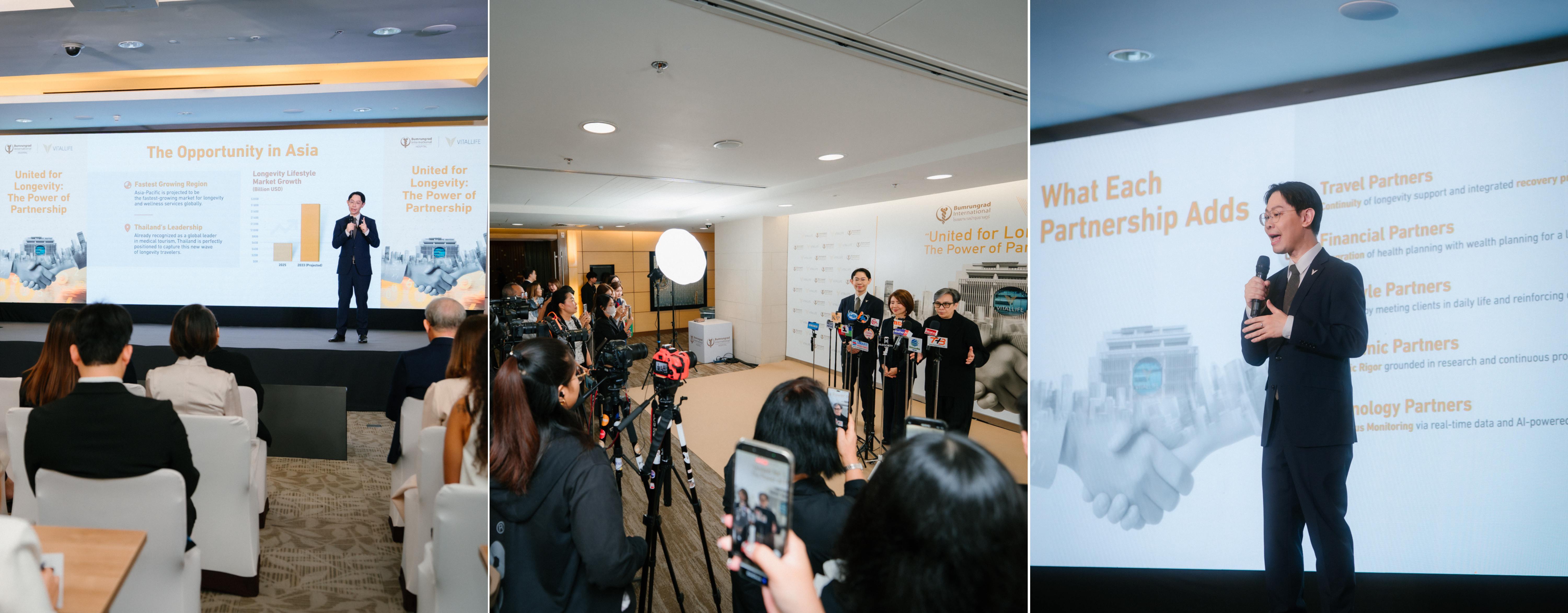
Bumrungrad International Hospital and VitalLife Scientific Wellness Center remain committed to delivering better health outcomes for every client. This press conference marks the beginning of a new chapter for VitalLife as it moves beyond the traditional boundaries of a wellness center to become an integral part of everyday life through strategic partnerships with like-minded organizations. Longevity is not a destination, but a meaningful journey—one that VitalLife undertakes together with its partners and clients.