
Food Intolerance
Our expert physicians are like detectives using the most up-to-date tests to determine which foods are producing the negative symptoms being experienced
Understand Your Food Responses More Clearly
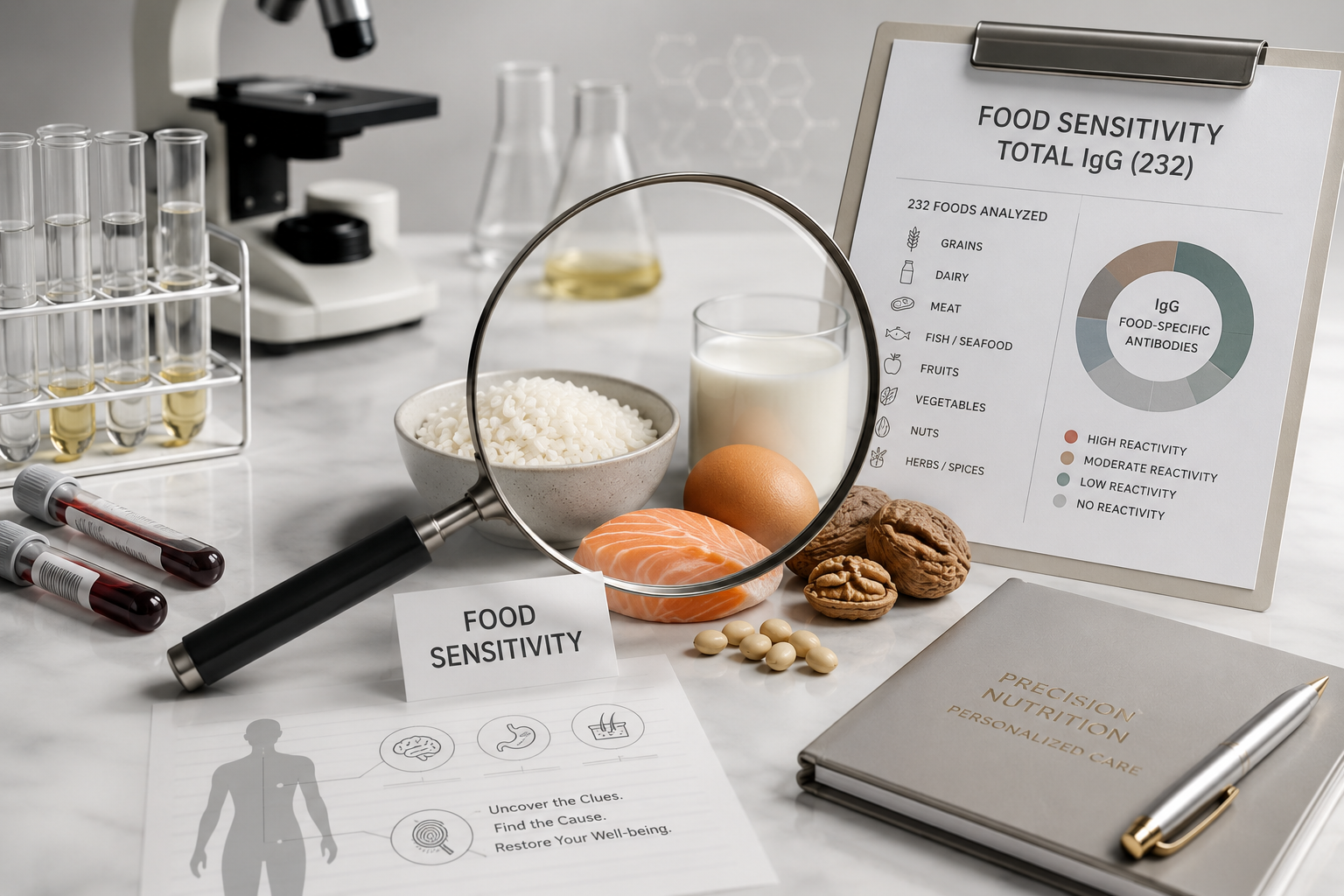
Food-related symptoms can be difficult to identify because they may be mild, intermittent, or influenced by many different factors. At VitalLife Scientific Wellness Center, Food Sensitivity Total IgG (232) provides supporting information that may help physicians and nutrition specialists review food-related immune responses together with your symptoms, health history, and dietary pattern.
Food Allergy and Food Sensitivity Are Not the Same
Reactions to food can occur through different biological mechanisms. Understanding the difference is important before interpreting any test result.
When Might Food Sensitivity Be Considered?
Some people experience recurring symptoms that appear to be associated with food, but these symptoms are often non-specific and can have many possible causes.
Food Sensitivity Total IgG (232)
The test evaluates food-specific IgG responses to 232 foods using Immunoblot technology from EUROIMMUN, Germany.

Use the Result as Part of a Bigger Health Picture
Test results can support a more informed discussion about diet, symptoms, and nutrition. They should not be used on their own to conclude that a food is the definite cause of a symptom.
Rather than removing many foods unnecessarily, a physician or nutrition specialist can help review the findings together with your eating pattern, medical history, and symptoms to determine whether dietary adjustment, monitoring, or further evaluation may be appropriate.
Food Sensitivity FAQs
How many foods are included in the test?
The Food Sensitivity Total IgG panel evaluates responses to 232 foods.
Do I need to fast before the blood test?
No. Fasting is not required for this test.
How long does it take to receive the result?
Results are typically available in approximately 5 working days.
Does a high IgG result mean I am allergic to that food?
No. IgG and IgE represent different immune responses. A food-specific IgG result does not confirm an IgE-mediated food allergy.
Should I eliminate every food that appears on the report?
Not necessarily. Results should be reviewed together with your symptoms, health history, and usual diet before making significant dietary changes.
Should I stop medications or supplements before testing?
Do not stop prescribed medications, steroids, or immunosuppressive treatment without speaking with your physician first.
For appointments and more information, please call +66 (0)2 066 8899.